The Beauty Backfire Effect: How Extreme Attractiveness Undermines Fitfluencer Relatability and Engagement
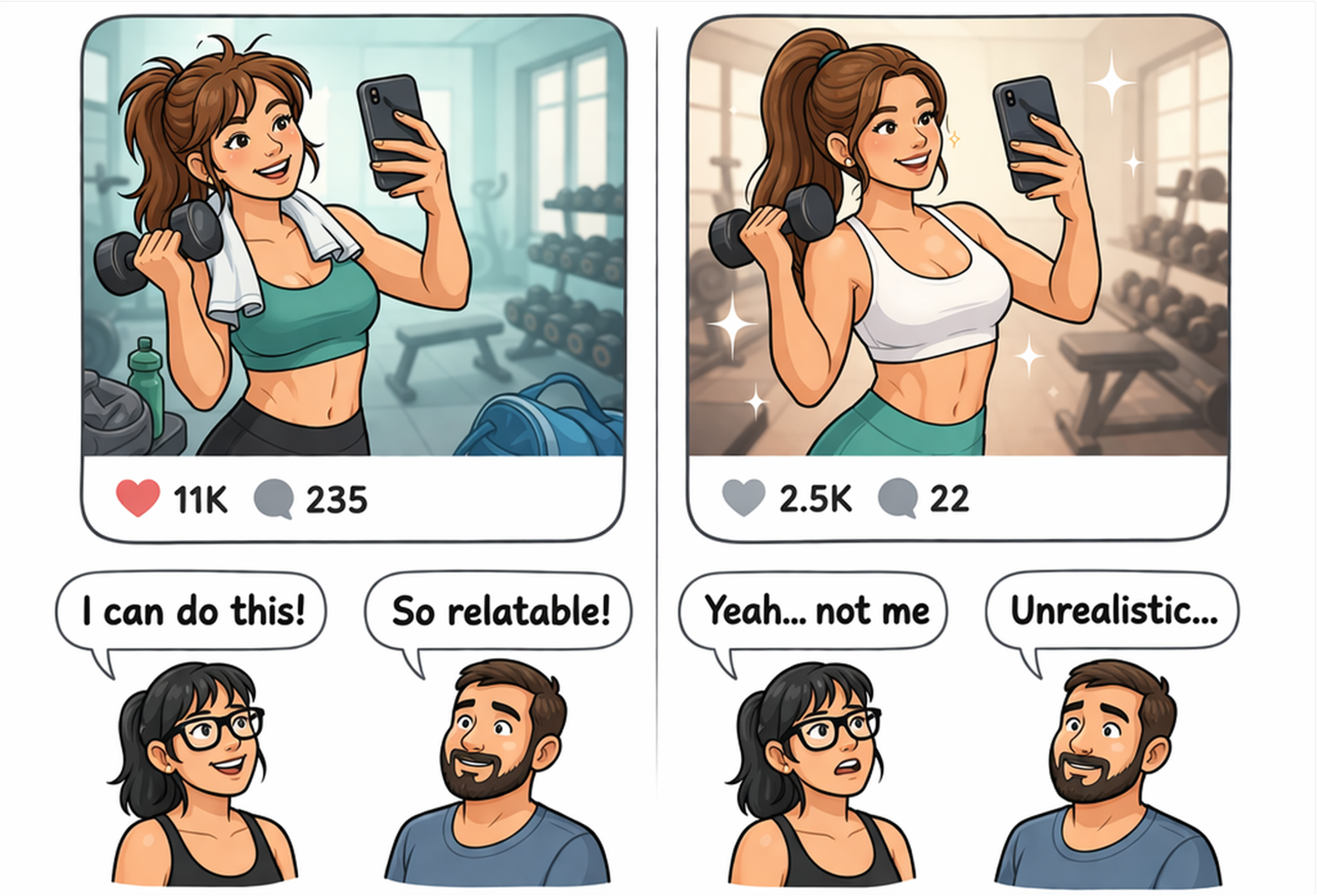
In the online fitness world, can good looks actually be a liability?
Conventional marketing wisdom contends that “sex sells,” positioning attractiveness as a key driver of audience engagement. However, through an empirical investigation of fitfluencers—social media content creators specializing in workout, nutrition, and lifestyle guidance—we reveal a counterintuitive phenomenon we call the “beauty backfire effect.” Namely, across three studies, we demonstrate that highly attractive fitfluencers receive lower engagement than their moderately attractive counterparts. This finding is explained by a reduction in the perceived relatability of highly (vs. moderately) attractive fitfluencers, seen as less accessible and eliciting greater upward social comparisons among their audience. Our process is particularly notable within the fitfluencer context, given its (a) unique emphasis on physical appearance as a credential and product and (b) coaching‐based influencer–follower dynamic. We identify humble self‐presentation as an effective mitigation strategy, enabling highly attractive fitfluencers to counteract relatability deficits by emphasizing personal shortcomings. In a social media landscape that increasingly embraces vulnerable expression and authentic imperfection, our findings suggest that extreme attractiveness—while traditionally advantageous—can become a reputational liability unless managed through strategic messaging.
The full paper can be found on my ResearchGate.
-
The Conversation: “The beauty backfire effect: Being too attractive can hurt fitness influencers, new research shows”
PsyPost: “Too attractive to relate? Study suggests extreme beauty may backfire for fitness influencers”
Olson Zaltman: “The prettiness penalty: Why beauty can backfire on social media”
NPR: “The Academic Minute” (12/8/25)
Top-trending research on Reddit’s r/Science with 11,000+ upvotes (8/24/25)